
KEYNOTE SPEAKERS
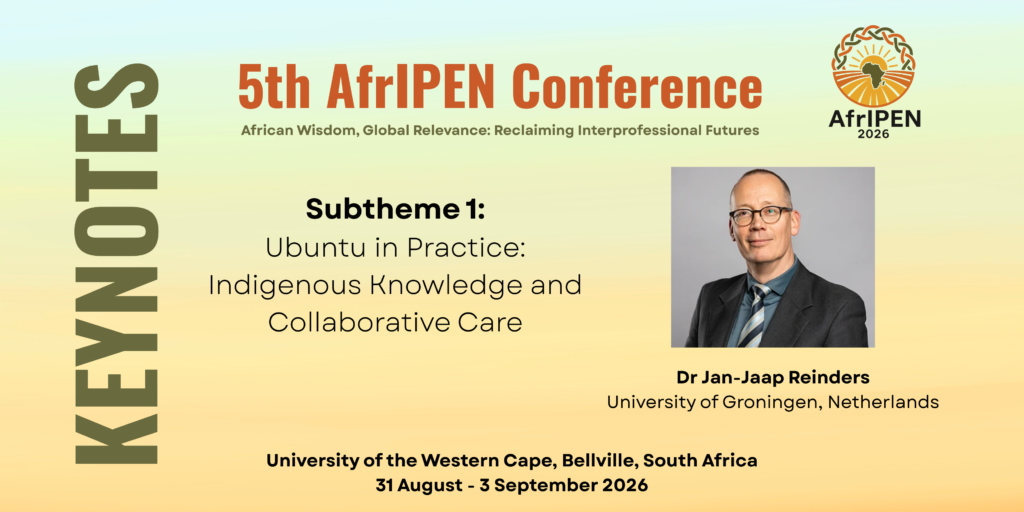
We are pleased to announce our first keynote speaker, Dr Jan Jaap Reiders, who will contribute to Subtheme 1: Ubuntu in Practice – Indigenous Knowledge and Collaborative Care.
In his keynote, Dr Reinders will explore how universal psychological mechanisms of interprofessional identity formation and activation operate across contexts, while recognising that cultural environments shape how these mechanisms are expressed in practice. Importantly, cultural contexts do not merely introduce variation, they also offer new perspectives and solutions that may not emerge within familiar systems.
This keynote invites us to reflect on how African philosophies such as Ubuntu can deepen our understanding of collaboration, identity, and practice within interprofessional teams, and how diverse contexts can strengthen the way we learn, work, and care together.
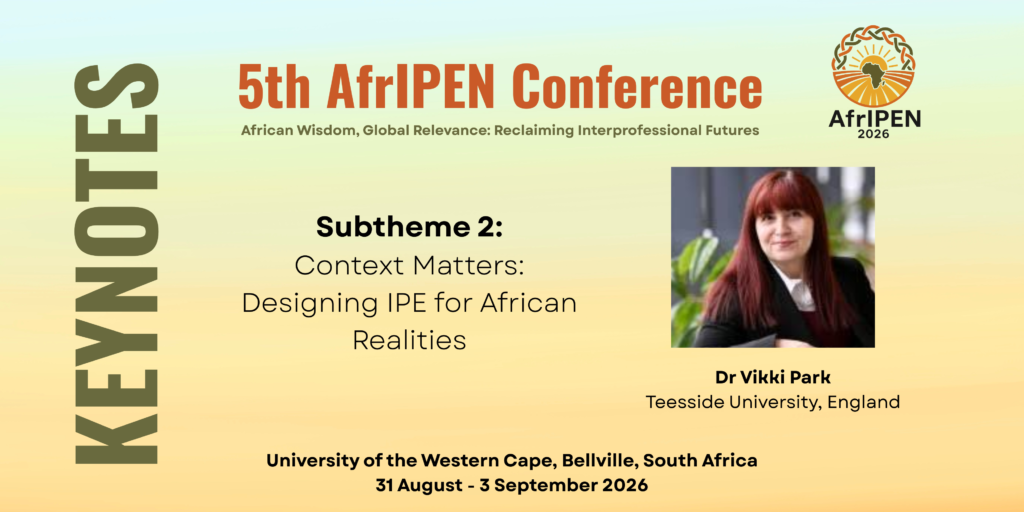
We are pleased to announce our second keynote speaker, Dr Vikki Park, who will contribute to Subtheme 2: Context Matters – Designing IPE for African Realities.
In her keynote, Intentional Inclusion: Celebrating Diversity through Interprofessional Education and Collaborative Practice, Dr Park will explore how interprofessional education and collaborative practice are most effective when intentionally designed to reflect the social, cultural, and systemic contexts in which health professionals learn and work. Her presentation highlights that context is not an added consideration, but a central driver of meaningful and impactful IPECP.
Guided by the philosophy of Ubuntu, her keynote positions intentional inclusion as both an educational commitment and an ethical imperative. By emphasising shared humanity and interconnectedness, this approach aligns with AfrIPEN’s vision of contextually grounded, culturally meaningful interprofessional learning that honours African values and lived experiences.
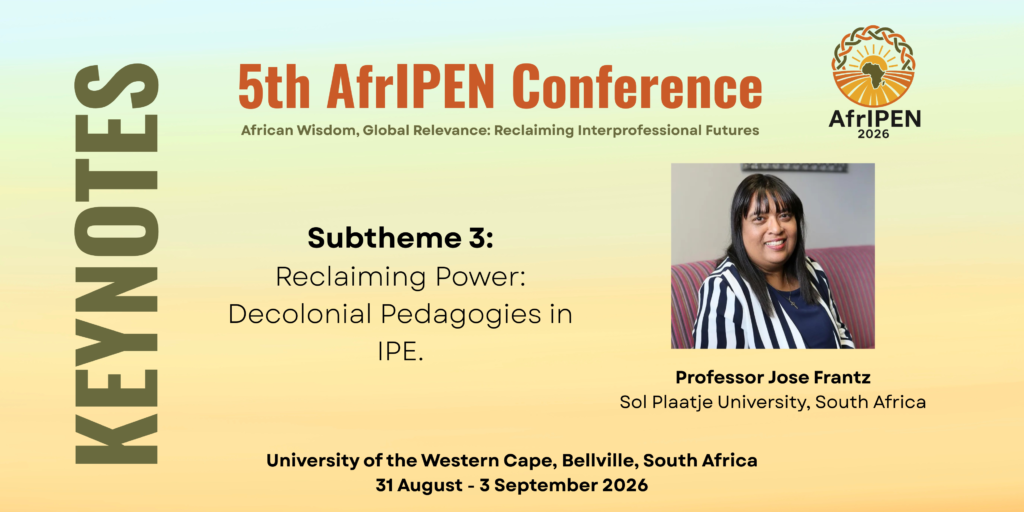
We are pleased to announce Prof Jose Frantz as one of our keynote speakers for the 5th AfrIPEN Conference, contributing to Subtheme 3: Reclaiming Power – Decolonial Pedagogies in IPE.
In her keynote, Prof Frantz will reflect on the importance of reimagining interprofessional education through approaches that centre African realities, lived experiences, and socially responsive pedagogies. Her presentation will explore how decolonial thinking challenges traditional hierarchies within health professions education and creates space for more inclusive, equitable, and contextually grounded forms of collaboration and learning.
This keynote speaks directly to the need for IPE that not only prepares students for collaborative practice, but also contributes to the transformation of health systems through justice, inclusion, and African-led innovation.
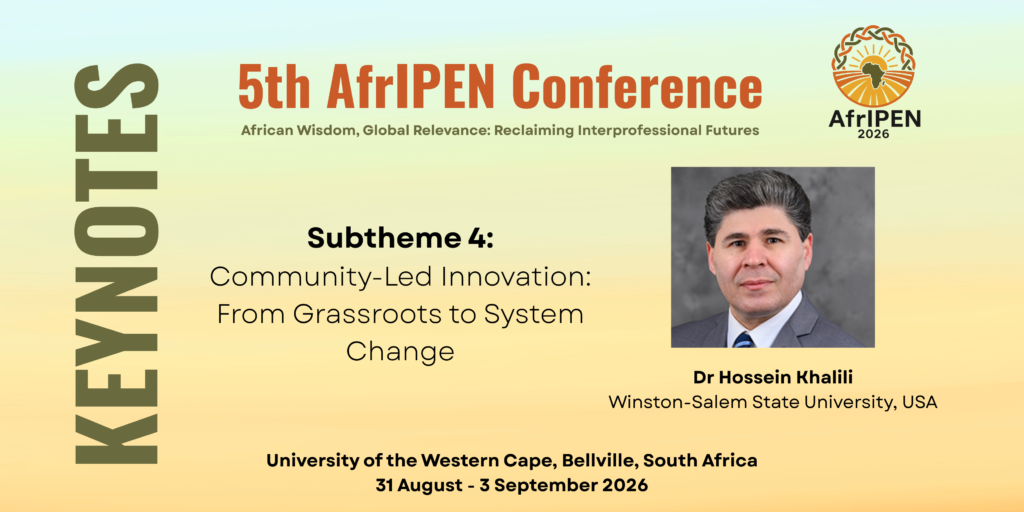
We are pleased to announce Dr Hossein Khalili as one of our keynote speakers for the 5th AfrIPEN Conference, contributing to Subtheme 4: Community-Led Innovation – From Grassroots to System Change.
In his keynote, Dr Khalili will reflect on the importance of strengthening interprofessional collaboration through approaches that are responsive to communities, context, and systems transformation. His presentation will explore how community engagement and collaborative leadership can contribute to meaningful innovation within health and social care education and practice.
This keynote speaks directly to the role of community-led approaches in shaping interprofessional education that is socially accountable, contextually relevant, and capable of driving sustainable change across diverse healthcare settings.
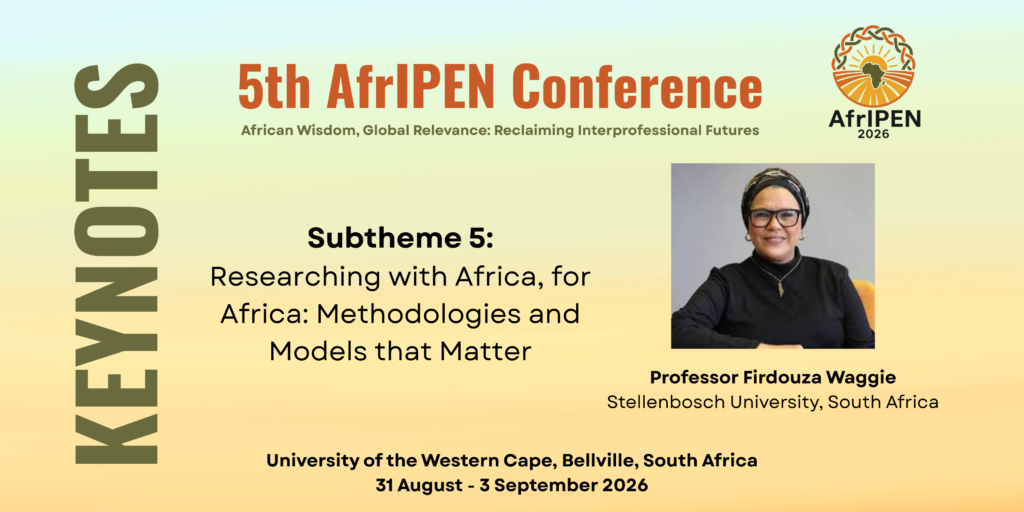
We are pleased to announce Prof Firdouza Waggie as one of our keynote speakers for the 5th AfrIPEN Conference, contributing to Subtheme 5: Researching with Africa, for Africa – Methodologies and Models that Matter.
In her keynote, Prof Waggie will reflect on the importance of research approaches that are grounded in African contexts, lived experiences, and community realities. Her presentation will explore how contextually responsive methodologies and collaborative knowledge production can strengthen interprofessional education and contribute meaningfully to health and social transformation across the continent.
This keynote speaks directly to the value of research that is not only conducted within Africa, but shaped by African perspectives, priorities, and ways of knowing. It highlights the importance of methodologies and models that are socially accountable, culturally relevant, and capable of informing sustainable and impactful practice.